Soil Health 101: Build Rich, Living Soil at Home
Learn the simple, science-backed steps to build rich, living soil at home—from testing and composting to mulching, watering, and no-dig care.
Understanding Living Soil
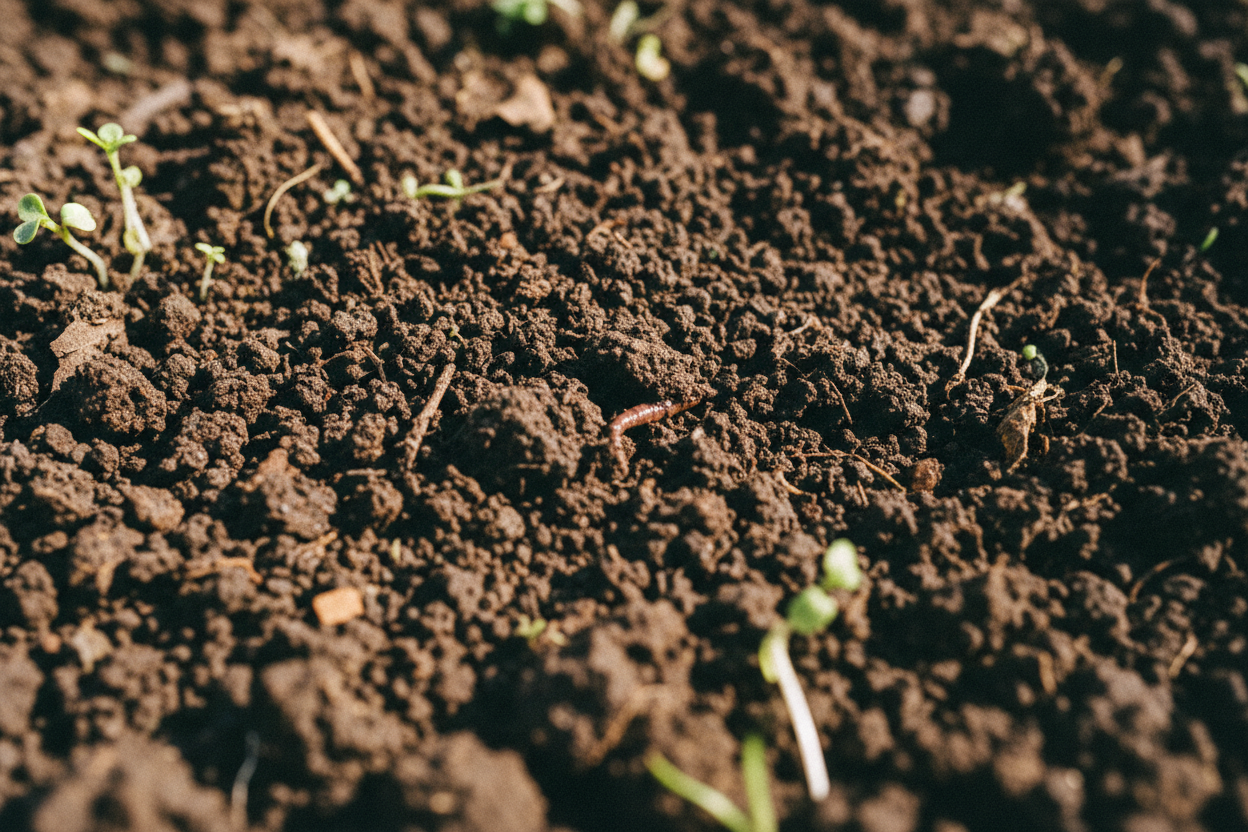
Healthy soil is a bustling ecosystem, not just a medium for roots. At its heart is the soil food web—a dynamic community of bacteria, fungi, protozoa, nematodes, arthropods, and earthworms that transform raw minerals and organic matter into plant-available nutrients. When microbes build aggregates, they create a crumbly structure with balanced porosity, allowing roots to breathe, water to infiltrate, and excess moisture to drain. Texture also matters: sand, silt, and clay blend to form loam, a gardener's ideal for balanced water and nutrient holding. Stable humus acts like a sponge, improving cation exchange capacity (CEC) so nutrients stay available rather than washing away. Plant roots release sugars into the rhizosphere, feeding microbes that, in turn, guard roots and unlock nutrients. Your goal is a dark, springy, sweet-smelling soil that supports continuous biological activity. Think of it as cultivating a tiny farm beneath your feet, where every handful holds the power to grow stronger plants with less input over time.
Assess Your Soil Like a Pro
Before making changes, learn what you have. Start with the feel test: moisten soil and squeeze; a long ribbon suggests more clay, while a gritty, non-cohesive ball points to sand. Try a simple jar test by shaking soil with water, letting layers settle to estimate texture. Observe drainage with an infiltration check: pour water into a shallow hole and time how quickly it disappears. Smell reveals a lot—an earthy aroma signals life, while sour or rotten notes hint at anaerobic conditions. Peek under mulch for earthworms; their presence suggests good biology. Use a basic pH kit or strips to gauge acidity or alkalinity, then adjust slowly with appropriate amendments if needed. After rain, note pooling or crusting, and test for compaction with a screwdriver; hard resistance indicates tight soil. Examine plant roots for branching and white fungal threads, signs of mycorrhizae. Keep a simple notebook of observations to guide smart, incremental improvements.
Feed the Soil, Not Just the Plant
Soil thrives on a steady diet of diverse organic matter. Top-dress beds with finished compost, leaf mold, or well-aged manure to supply a broad spectrum of nutrients and beneficial organisms. Build your own compost by balancing carbon-rich browns (dry leaves, shredded paper, straw) with nitrogen-rich greens (kitchen scraps, grass clippings, coffee grounds), keeping particles small and moisture like a wrung-out sponge. Avoid adding diseased plants or greasy foods. For a microbial boost, blend in a bit of vermicompost. Grow green manures and cover crops to add biomass, scavenge nutrients, and feed roots year-round; chop and drop them as a living mulch. Consider pre-charged biochar for long-term carbon and habitat, but mix it with compost first. Use gentle, slow-release mineral amendments when tests show deficiencies, and resist overusing fast-acting salts that can disrupt biology. Favor surface applications and minimal disturbance—let the community pull nutrients downward, creating a pantry of fertility right at the soil surface.
Protect Structure and Water Wisely
Great soil is easy to damage and slow to rebuild, so guard structure with minimal tilling. Instead of frequent rototilling, loosen compacted zones with a broadfork or digging fork, then leave aggregates intact. Establish permanent beds and paths to prevent foot traffic on growing areas, and cover bare ground at all times. Apply mulch—shredded leaves, straw, wood chips, or compost—in a generous layer to moderate temperature, conserve moisture, suppress weeds, and feed fungi. Replenish as it breaks down. Water with intention: deep, infrequent sessions encourage roots to explore, while frequent sips keep roots shallow. Early morning irrigation reduces loss and disease risk, and drip or soaker systems target the root zone with minimal waste. Where drainage is poor, consider raised beds or organic matter additions rather than aggressive digging. Catch and slow rainfall with gentle contours or simple basins. With these habits, you reduce erosion, fuel microbes, and create a resilient, self-maintaining soil scaffold.
Boost Biodiversity and Long-Term Resilience
Diversity is the engine of soil health. Mix plant types—grasses, legumes, herbs, and deep-rooted perennials—to foster varied root exudates that feed a broad microbial community. Practice crop rotation among plant families to disrupt pests and balance nutrient drawdowns. Add seasonal cover crops to shield soil, fix nitrogen, and keep biology active when beds would otherwise be bare. Interplant flowers to attract pollinators and beneficial predators, and leave small undisturbed zones where fungi and ground beetles can thrive. Lightly inoculate new beds with a handful of healthy garden soil or compost to spread mycorrhizae. Over time, watch for signs of success: darker color, a crumbly texture, faster infiltration, fewer weeds, and plants that need less water and fertilizer. Adjust as you learn—dial mulch types, tweak watering, and tailor amendments to observed needs. With steady, thoughtful care, your garden becomes a living loop, where biodiversity, biology, and structure reinforce each other year after year.