Noise-Canceling Headphones: What to Look For
Compare ANC strength, sound quality, comfort and fit, battery life, Bluetooth codecs, mic performance, and app features before you buy.
How Noise Cancelation Works: Active noise cancelation (ANC) uses outward- and inward-facing microphones to sample ambient sound and generate an equal and opposite waveform, reducing perceived noise before it reaches your ears. There are three common designs: feedforward systems place mics outside the ear cup or earbud to preempt external noise, feedback systems monitor sound inside the ear to correct what you actually hear, and hybrid systems combine both for wider coverage. The seal from passive isolation is equally important; well-fitted cushions or ear tips block high frequencies that algorithms struggle with. Many models add transparency mode, letting in voices and traffic when awareness matters, and some offer adaptive ANC that scales intensity based on environment. Consider how algorithms handle wind noise, sudden bumps, and cabin rumbles, and whether you experience any pressure sensation during long listening sessions. Ultimately, strong ANC should quiet repetitive low-frequency hums without introducing hiss, altering tone too much, or causing fatigue in everyday settings like commuting, flights, or open offices.
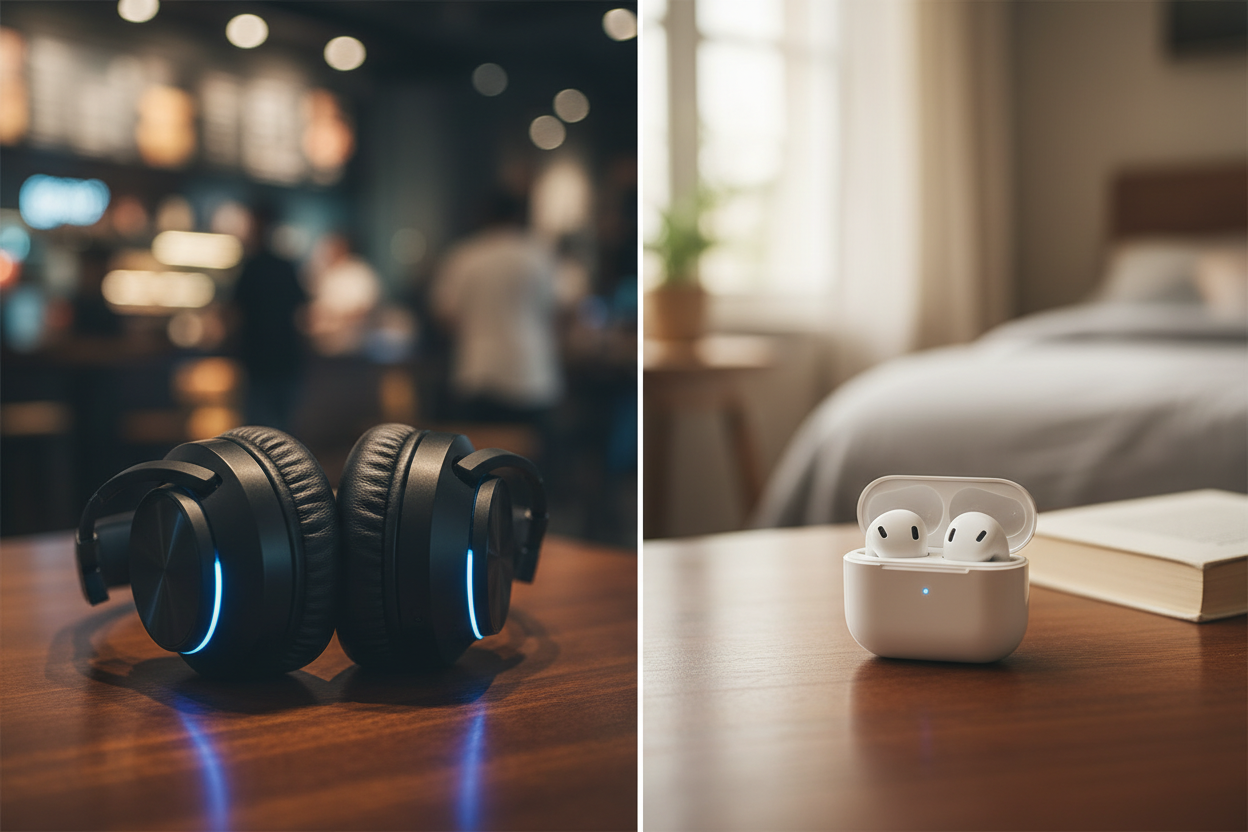
Sound Quality and Codecs: Even excellent ANC should not come at the expense of sound quality. Listen for a balanced frequency response with clear mids for vocals, articulate treble without harshness, and controlled bass that remains tight when ANC is engaged. Large drivers and well-tuned acoustics can create a wider soundstage, but tuning choices matter more than size alone. Wireless performance depends on Bluetooth codecs; basic SBC works, while formats like AAC, aptX, or LDAC can improve clarity and reduce artifacts when supported by both your device and headphones. Keep an ear out for distortion at higher volumes, changes in tone when switching ANC on or off, and whether an EQ can correct minor issues without adding noise. If you use streaming services or high-bitrate files, test how tracks with complex instrumentation hold together. A good pair should maintain detail, separation, and dynamics across genres, podcasts, and calls, not just simple test tones.
Comfort, Fit, and Build: Comfort determines whether you actually enjoy your noise-canceling investment. For over-ear designs, evaluate clamping force, cushion depth, and weight distribution across the headband to avoid hot spots during long sessions. Glasses wearers should check for pad gaps that reduce passive isolation and ANC effectiveness. On-ear models save space but may create pressure on the pinna, while in-ear options rely on tip size and seal; test multiple ear tip materials for stability and comfort. Consider materials—memory foam, breathable fabric, or protein leather—and how they handle heat and sweat. Hinges, sliders, and folding mechanisms should feel solid and resist creaks, with enough travel to fit different head shapes. Look for IP ratings if you plan to use them at the gym, and for replaceable ear pads or tips to extend lifespan. A protective case, robust hinges, and scratch-resistant finishes can protect your purchase when commuting, traveling, or tossing them in a backpack with other consumer electronics.
Battery Life, Charging, and Controls: Real-world battery life varies with volume, codec, and ANC intensity. Check the rated hours with ANC on, and whether there is a fast-charge feature that delivers several hours of playback after a short top-up—handy before a commute. A modern USB-C port simplifies charging with the same cable as many laptops and phones. Some headphones support wired playback via analog or digital cables, which can conserve power or keep you connected during flights. Controls matter more than spec sheets suggest: physical buttons provide reliable feedback with gloves or sweat, while touch controls offer gestures but may misfire in rain or when adjusting the fit. Companion apps that provide customizable EQ, ANC levels, transparency, and wear detection can elevate daily use. Prioritize intuitive layouts, audible prompts, and the ability to remap controls, so you can adjust volume, skip tracks, or toggle modes without hunting through menus or pulling out your phone.
Call Quality, Noise Handling, and Latency: Great microphones sharpen your voice in meetings and on the go. Look for multi-mic arrays with beamforming that focus on speech and noise reduction that suppresses traffic, chatter, and keyboard clicks without making you sound underwater. Features like wind filtering and sidetone (hearing your own voice) help you speak naturally outdoors. If you switch between laptop and phone, multipoint connectivity lets you stay connected to two devices and auto-switch when calls arrive. For gaming or video calls, consider latency—some headphones offer low-lag modes that improve lip sync, though they might trade off audio quality or range. Test how effectively ANC works during calls, as not all models cancel noise for the microphone as well as for your ears. Stability also matters: strong antenna design and reliable reconnection minimize dropouts in dense wireless environments such as offices, transit hubs, and cafes filled with other Bluetooth devices.
Value, Testing Tips, and Longevity: The best noise-canceling headphones balance performance, features, and after-sales support. Compare what you truly need—top-tier ANC, premium codecs, or all-day comfort—against your budget, and factor in warranty, return policies, and the availability of replacement ear pads, tips, and cables. Evaluate firmware updates and app support that can improve ANC tuning, controls, and stability over time. When testing, bring familiar playlists with bass sweeps, dense mixes, and spoken word. Switch ANC on and off to hear tonal shifts; check transparency mode for natural voices; and move between loud and quiet spaces to gauge adaptability. Try calls in a breezy area to assess microphone resilience. If possible, wear them for an extended session to judge heat buildup, headband pressure, and pad comfort. A durable case, replaceable parts, and efficient power management translate to a longer useful life, making your choice a smarter buy in the world of computers and consumer electronics.