Cultural Etiquette Essentials Every Traveler Should Know
From greetings to dress codes and dining, these cultural etiquette essentials help travelers avoid missteps and connect respectfully worldwide.
Greetings and first impressions: Your first hello sets the tone for every journey, so approach new encounters with curiosity, humility, and a willingness to adapt. In some places, a firm handshake signals confidence; elsewhere, a gentle bow, nod, or light cheek touch is customary. When unsure, let your host lead and mirror their style. Use appropriate titles and family names until invited to be more familiar, and learn to pronounce names carefully. Moderate eye contact can convey confidence in some cultures but feel intrusive in others, so read the room and soften your gaze if people seem uncomfortable. Respect personal space: step back if someone leans away; step closer only if they initiate. Keep your voice even, avoid interrupting, and smile sincerely. Present or receive items with both hands when that's customary, including business cards or small tokens. Be punctual for professional meetings, but expect a relaxed pace in social settings. Above all, observe, ask polite questions, and adapt quickly—the best etiquette is being responsive to local cues.
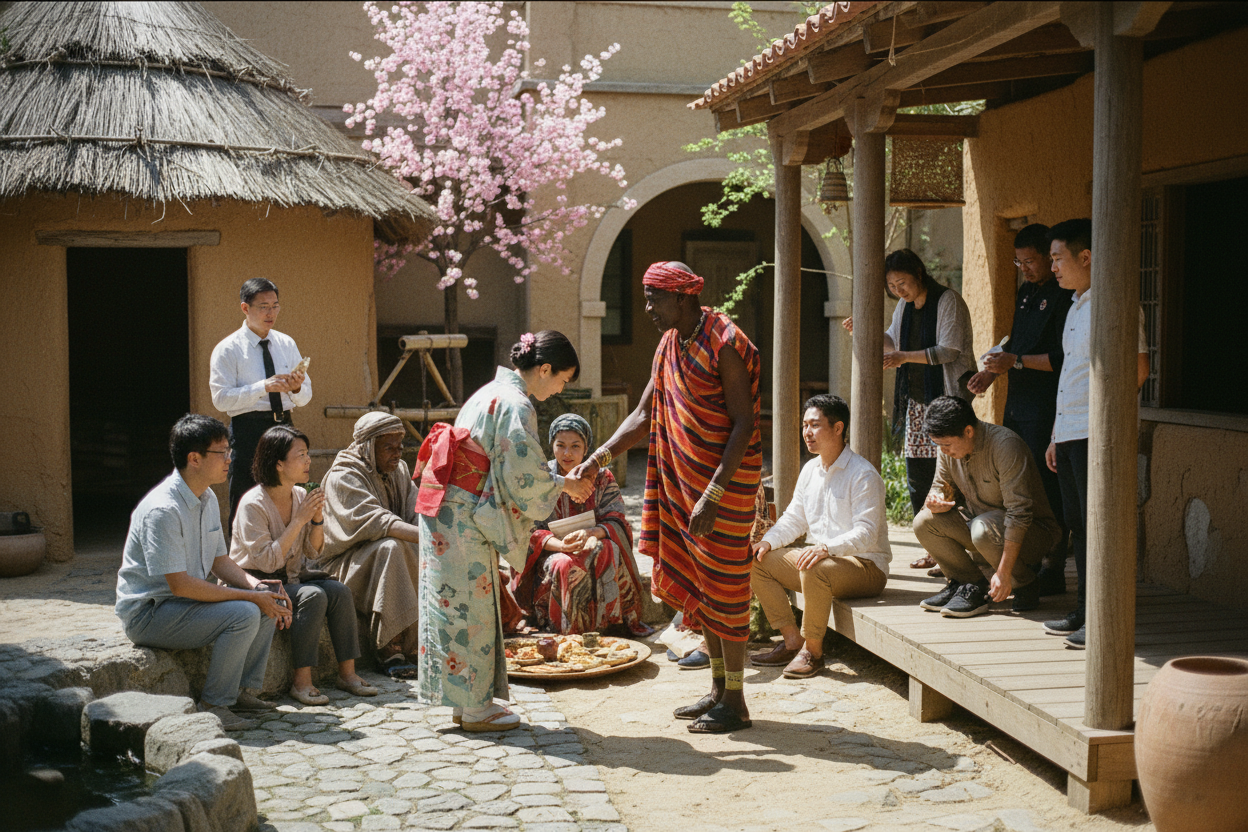
Dining etiquette and table manners: Meals are a stage for hospitality, and your behavior shows respect for the people who welcome you. Wait to be seated, notice the seating order for elders or honored guests, and don't begin eating until the host starts or invites you. Use utensils correctly: avoid pointing with chopsticks, never leave them upright in a bowl, and use serving tools for shared dishes. In some places the left hand is avoided for eating; in others, it is perfectly normal. Pace yourself, accept refills modestly, and learn the rhythm of toasting—you may pour for others before yourself or touch your glass below a senior person's rim to show deference. Finishing every bite can signal appreciation in some cultures; elsewhere, a small leftover shows you were well fed. Tipping varies widely: it might be expected, built into the bill, or considered unnecessary. Keep conversation light, avoid table distractions like loud phones, and thank your host sincerely.
Dress, modesty, and sacred spaces: Clothing speaks before you do, so align your dress with local norms and the day's activities. Cities might welcome fashionable outfits, while rural areas value modesty and neutral tones. When visiting religious or sacred sites, cover shoulders and knees, remove hats, and be ready to take off shoes; carry a light scarf for quick adjustments. Respect posted dress codes and photography rules—sometimes images are restricted or flash is forbidden. Keep voices low, avoid blocking worshippers, and never climb on monuments for photos. Be mindful of body language: don't point the soles of your feet at sacred objects, avoid stepping on thresholds, and stand aside when processions pass. Swimwear belongs at the beach or pool, not in markets or temples; a quick-change layer helps you shift contexts gracefully. If tattoos or slogans may be sensitive, cover them where appropriate. When in doubt, choose simple, clean, and respectful attire that prioritizes cultural sensitivity over personal style.
Communication styles and nonverbal signals: Cultures vary widely in how they deliver feedback, express agreement, and use silence. Direct talk can be appreciated as clear and efficient, but elsewhere indirect phrasing protects relationships and saves face. A polite yes may mean I hear you, not I agree, so listen for context and confirm gently. Observe tone, pace, and volume: animated speech can signal warmth in one setting and seem aggressive in another. Be cautious with humor, sarcasm, and idioms; a simple, warm style travels best. Gestures change meaning across borders: the familiar okay sign, a thumbs-up, or beckoning with a curled finger can offend in some places. Point with an open hand, keep palms visible, and avoid excessive touching unless locals do so. Respect personal space norms—some cultures stand close, others keep more distance. When confusion arises, rephrase rather than repeat louder, and invite clarification. Ask open questions, practice active listening, and let nonverbal cues guide your approach.
Social norms, gifts, and everyday courtesy: Good manners flourish in the everyday details. If invited home, bring a small gift—local treats, stationery, or a regional specialty—and offer or receive items with both hands where customary. Some hosts prefer gifts opened later; follow their lead. Removing shoes at the door is common; carry clean socks. Respect queuing etiquette, offer your seat to elders, and keep voices low on public transport. Always ask before taking photos of people, especially children or vendors, and accept no graciously. In markets, bargaining can be a friendly ritual; smile, stay patient, and know when a price is fixed. Handle cash respectfully and avoid flashy displays. Travel responsibly by prioritizing sustainability: refill bottles, refuse unnecessary packaging, dress modestly to reduce cultural friction, and stay on marked paths to protect sites. Learn a few local phrases for gratitude and apologies. When you make mistakes—and you will—apologize, adjust, and move forward with kindness.