A Beginner's Guide to Sustainable Style
New to sustainable fashion? Learn simple, stylish steps to build a capsule wardrobe, shop smarter, and care for clothes that last.
Start With Mindful Choices
Sustainable style begins with a mindset shift: dress to support your values and daily rhythm, not to chase every trend. Start by auditing your closet and noting what you truly wear, what fits well, and what colors flatter your skin tone. This clarity helps you make intentional choices that match your lifestyle. Create a wishlist and define purchase criteria such as quality over quantity, comfort, and versatility. Practice a cooling-off period before buying, and compare options by durability, maintenance needs, and how many outfits they complement. Build simple uniforms you love, like dark denim, a crisp shirt, and clean sneakers for errands, or smart trousers, a soft knit, and loafers for work. Think in terms of outfit formulas rather than single pieces, and track wears to understand true value. Curate rather than accumulate, prioritizing pieces that make you feel confident and at ease. This mindful foundation reduces impulse purchases, saves money, and sets the stage for a wardrobe that supports you day after day.
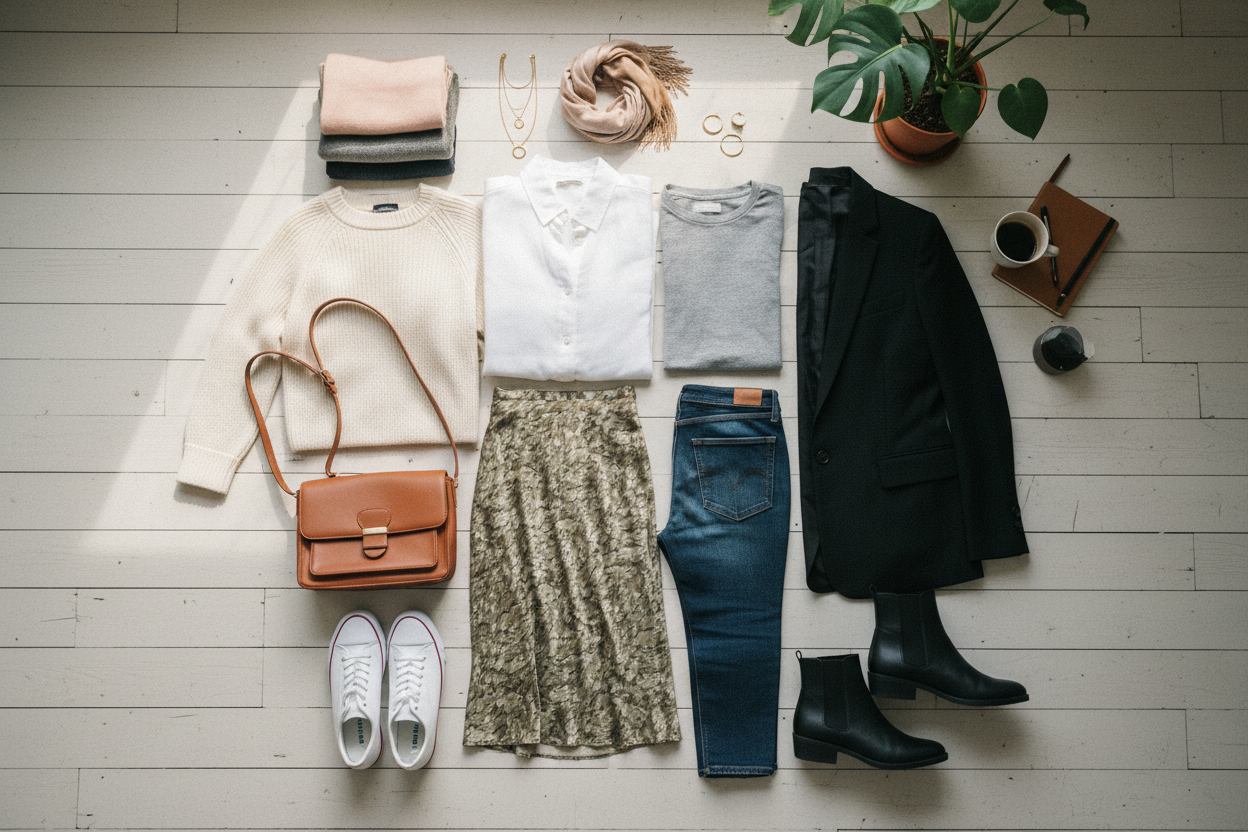
Build A Capsule Foundation
A well-planned capsule wardrobe streamlines decision-making and boosts creativity. Instead of fixating on exact numbers, focus on a balanced range of silhouettes that mix and match: straight-leg trousers, an A-line skirt, a tailored blazer, a relaxed button-down, a fine-gauge knit, and a versatile dress. Choose a base of neutral hues and add one or two accent colors you genuinely enjoy. Incorporate seasonless fabrics that layer easily, like mid-weight cotton twill, merino, or lyocell blends. Footwear that bridges settings—minimal sneakers, loafers, ankle boots, or simple sandals—amplifies flexibility. Use cost per wear as your north star, prioritizing pieces that shift from casual to polished with a swap of shoes or a belt. Tailoring is transformative; a small nip at the waist or a clean hem can make a garment feel custom. To keep the capsule dynamic, revisit it each season, rotating pieces in and out, while maintaining the core integrity that keeps your style cohesive.
Choose Better Materials
Fabric choice is the engine of sustainable style. Opt for natural fibers like organic cotton, linen, hemp, and wool for breathability and durability, and consider semi-synthetics like lyocell for a silky drape with lower impact. Recycled fibers can reduce resource use, especially when blended thoughtfully for performance and longevity. Evaluate cloth by hand-feel and weight; denser weaves and well-spun yarns typically wear longer and resist pilling. Inspect construction: even stitching, secure buttons, and sturdy seams signal quality. Prefer undyed or low-impact finishes when possible, and be mindful of coatings that may compromise breathability or require special care. If you choose synthetics for athletic or weather-resistant needs, wash in ways that reduce micro-shedding and prioritize longevity over novelty. Learn the care needs of each fabric—linen loves a relaxed texture, wool thrives with gentle airing, and denim benefits from fewer washes. Choosing materials with intention leads to comfort, resilience, and timeless texture that elevates everyday outfits without constant replacement.
Shop Secondhand And Swap
Embracing secondhand is one of the most accessible ways to build a distinctive, lower-impact wardrobe. Thrifting, consignment, and vintage shopping extend a garment's life and often unlock superior craftsmanship at attainable prices. Go in with measurements and a focused list, scanning racks by color, texture, and silhouette. Inspect underarms, hems, zippers, and linings, and try pieces on to confirm range of motion and comfort. Small imperfections can be fixed; a great tailor can shorten sleeves, shape a waist, or refresh a hem. Explore clothing swaps with friends to rehome items you no longer wear and discover fresh treasures. For special occasions, consider borrowing or renting so you can enjoy standout looks without long-term storage or single-use waste. Get creative with upcycling—turn a men's shirt into a beach cover-up, or add new buttons to refresh a blazer. Secondhand strategies save money, reduce demand for new production, and help cultivate personal style that feels uniquely yours.
Care, Repair, And Extend Life
How you maintain clothes matters as much as what you buy. Wash less and spot clean to preserve fibers, using cold water and gentle detergents to reduce wear and energy use. Zip zippers, button buttons, and turn garments inside out before washing; delicate items thrive in mesh bags. Air-dry whenever possible to prevent shrinkage and extend elasticity, and lay knits flat to retain shape. Steam to refresh and release odors between wears. Build a simple repair kit with needles, thread, spare buttons, and fusible tape. Learn basic mending: secure loose hems, reinforce seams, darn socks, and patch denim. A fabric comb can revive knits by removing pills, while careful stain treatment extends life without harsh bleaching. Careful storage matters too—fold heavy knits, use breathable hangers, and add cedar to deter pests. Maintain shoes with brushes, conditioner, and protective spray, and use shoe trees to preserve form. Thoughtful care turns favorites into long-term staples, reducing waste and keeping your style polished.
Style For Versatility And Longevity
Creating more outfits from fewer pieces is a skill powered by versatility. Start with an outfit formula—base layer, mid layer, and accent—and mix textures like crisp poplin with a soft knit or structured twill. Balance proportions by pairing relaxed tops with tailored bottoms or flowing skirts with fitted tees. Use a restrained palette—two neutrals and one accent—to make mixing effortless, then add character with accessories such as a belt, scarf, or simple jewelry. Transition looks across settings by swapping footwear; sneakers relax a blazer, while loafers sharpen denim. Layer strategically for weather shifts: a turtleneck under a sleeveless dress, or a lightweight jacket over breathable basics. Develop a personal signature—cuffed sleeves, rolled hems, or a favorite hat—to anchor outfits beyond trends. Photograph combinations you love to build a digital lookbook and identify gaps. Prioritize comfort and movement so you reach for pieces often. Versatile styling ensures every item earns its place and supports consistent, confident dressing.
Align Purchases With Your Values
Sustainable style flourishes when your spending reflects your priorities. Set a budget and evaluate cost per wear, aiming for pieces that serve multiple roles and endure frequent rotation. Before purchasing, ask practical questions: Does it match your palette, pair with at least three items, and fit your daily routine? Will you care for it properly, and does it feel great now, not just in theory? Explore brands and makers that share your values, looking for transparency on materials, craftsmanship, and labor. Beware vague claims; focus on specifics like fiber content, care instructions, and construction details. Favor multi-purpose items that bridge work, errands, and social plans. Use a written wishlist and a waiting period to curb impulse buys. When parting with clothes, sell, swap, or donate thoughtfully, and recycle textiles that are beyond repair. Join local swap events or mending circles to build community and skills. Progress over perfection is the goal—every mindful step shapes a wardrobe that looks good, feels good, and does good.